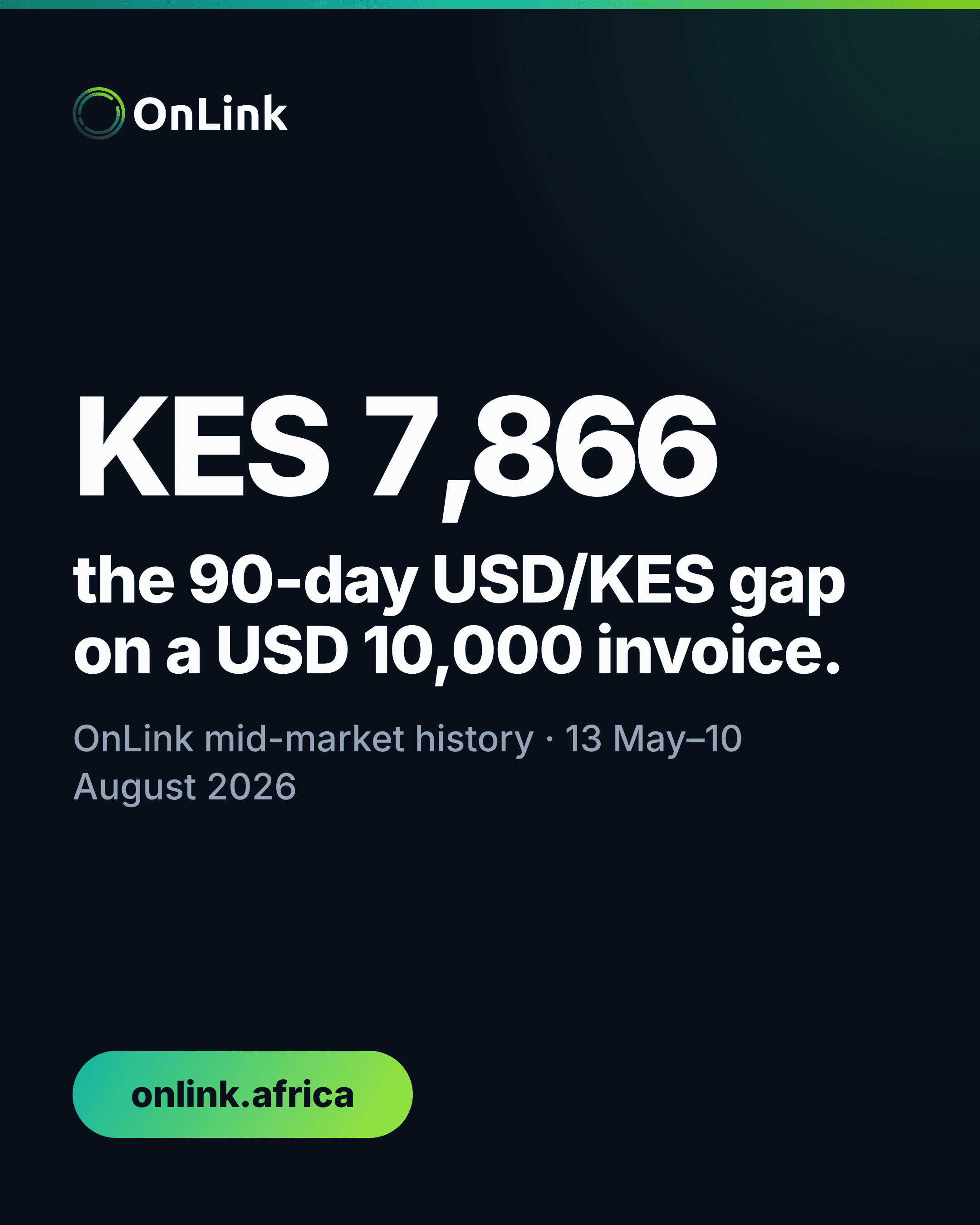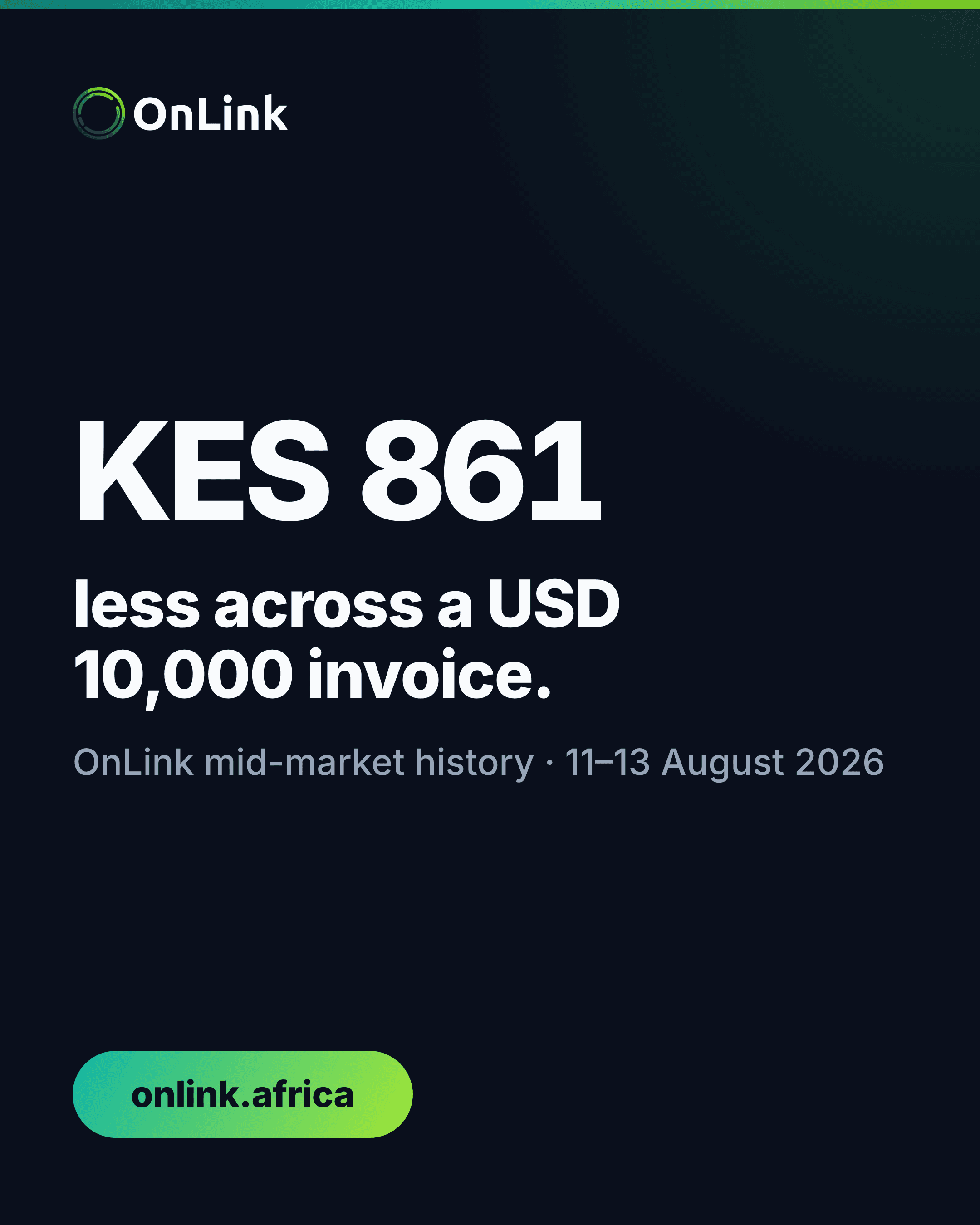
CBK held 8.75%; USD/KES moved just KES 0.09
USD/KES fell by KES 0.09 from 11 to 13 August after the CBK rate hold, cutting the mid-market value of a USD 10,000 invoice by about KES 861.
1 min read
Safaricom has introduced a time-limited Pochi la Biashara customer tariff and will widen free Buy Goods collections and cut Business Till transfer fees from 7 August.
Safaricom has changed several M-PESA prices that matter to small merchants and their customers. A Pochi la Biashara promotion began on 1 August; changes to Lipa na M-PESA Buy Goods collections and M-PESA Business Till transfers are scheduled to start on 7 August. The changes are set out in Safaricom's current M-PESA charges and were independently documented by tech-ish.
The important distinction is who pays. The Pochi change reduces the charge for the person paying a merchant. The Buy Goods and Business Till changes reduce charges paid by the business accepting or moving money.
For Pochi la Biashara, payments of KES 200 or less are free from 1 August to 31 October 2026. Payments above KES 2,500 carry a flat KES 50 charge during the same period, according to the revised tariff reported by tech-ish. This is a customer-side charge: a trader receiving a Pochi payment is not the party charged for sending it.
From 7 August, Safaricom will raise the free collection threshold for Lipa na M-PESA Buy Goods tills from KES 200 to KES 500. The published merchant tariff above that threshold remains 0.55%, capped at KES 200. In practical terms, a business that receives a KES 450 Buy Goods payment will no longer pay a collection fee for it. See Safaricom's M-PESA charges and the independent tariff breakdown.
Safaricom is also reducing charges for a Business Till sending money to a phone number or PayBill. The updated table keeps transfers of KES 100 or less free; across the paid bands, the listed fees are generally roughly half the previous level. For example, the reported Business Till fee to send KES 10,000 to a phone number falls from KES 90 to KES 45, while the PayBill fee for that amount falls from KES 48 to KES 24 from 7 August.
The Buy Goods change is most useful for merchants whose transactions often sit between KES 201 and KES 500: those collections move into the free band. For a business that pays staff, suppliers or bills from a Business Till, the lower outbound transfer tariff affects a recurring operating cost rather than a one-off payment.
For customers, the temporary Pochi tariff may remove a reason to use cash for some low-value purchases. It does not make every M-PESA payment free, and its published end date is 31 October. Businesses should therefore avoid treating the Pochi offer as a permanent price change unless Safaricom extends it.
The three changes have different start dates and different parties paying the fee. A merchant should confirm whether they use Pochi, a Buy Goods till or a Business Till before updating prices or telling customers about the change. They should also check the tariff at the time of a transaction, because M-PESA fees can differ by service and Safaricom may revise them.
These are M-PESA pricing changes, not a change to foreign-exchange rates or a guarantee of lower costs across other payment services. For any business decision, compare the applicable tariff, the payment route and the full cost of receiving or moving the funds.
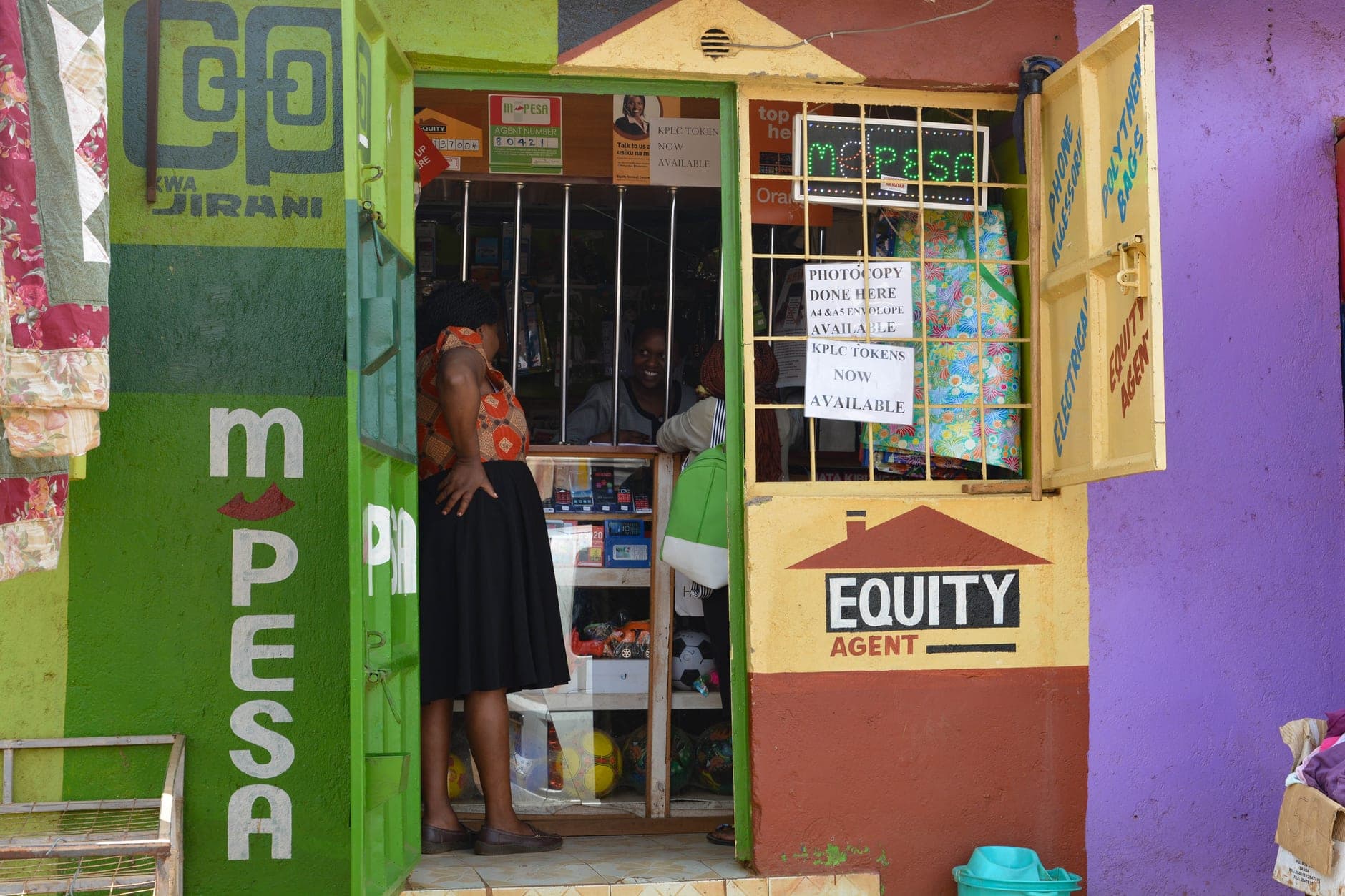
Cover photo of an M-PESA and Equity agent in Nairobi by Fiona Graham, licensed under CC BY-SA 2.0. Resized from the original; this derivative is available under the same licence.
Editorial
The OnLink editorial team writes about money, payments and multicurrency banking for people and businesses moving money in and out of Kenya.
USD/KES fell by KES 0.09 from 11 to 13 August after the CBK rate hold, cutting the mid-market value of a USD 10,000 invoice by about KES 861.
OnLink's 90-day USD/KES series spans KES 0.79, a KES 7,866 difference on a USD 10,000 supplier bill, before the 11 August policy decision.
Cloud9's second deal in 92 days brings Chpter's 4,500-business commerce base into banking, but its announcement publishes no FX rate, fee or delivery time.