
How to send money from Kenya to China
At a CNY sell rate of KES 19.42, a CNY 100,000 supplier invoice costs KES 1,942,000; each KES 0.10 rate difference changes the bill by KES 10,000.
4 min read
A Kenya-focused checklist for preparing, checking and tracking an international supplier payment without losing sight of the exchange rate, payment details or supporting documents.
Paying an overseas supplier is not just a matter of entering an amount and pressing send. A small mismatch between an invoice, a beneficiary's bank details and the payment reference can delay a shipment, create follow-up work for your finance team or make reconciliation harder.
This checklist is for Kenyan businesses paying for stock, software, professional services or other legitimate business expenses abroad. It focuses on the decisions that stay useful regardless of the country, currency or payment provider you use.
This is a practical operations guide, not legal, tax or accounting advice. Requirements and available payment options can vary with the transaction, recipient country and financial institution.
Before opening a banking or payment app, make sure the invoice gives your team enough information to approve and explain the payment later. At a minimum, check that it states:
If the invoice says USD 5,000, agree internally whether the supplier must receive exactly USD 5,000 or whether your business is paying a KES amount that will be converted. Those are different instructions. The first focuses on the recipient amount; the second leaves more currency risk with the supplier.
Keep the purchase order, contract or email approval with the invoice. A clear record helps your own reconciliation and can make it easier to answer a provider's questions about the purpose of a payment.
Payment-instruction fraud often looks like an ordinary email asking you to use new bank details. Treat a request to change a beneficiary account as a change that needs independent verification.
Call a known contact using a phone number your team already has, or use another trusted contact method. Do not rely only on the number or link in the change request. Confirm the beneficiary's legal name, account number or IBAN where applicable, bank name, bank country and SWIFT/BIC where the receiving bank uses one.
For a first payment or a changed account, consider a small test payment only if the supplier agreement and your payment provider allow it. That is a business control, not a substitute for checking the details. A payment that has already been sent may be difficult or impossible to recall.
The currency on the invoice is usually the starting point. A supplier invoicing in USD expects a USD obligation to be settled, while a supplier invoicing in EUR expects EUR. Do not assume that sending KES will arrive as the supplier's invoice currency, or that the supplier's bank will use an acceptable exchange rate.
For a supplier invoicing in Chinese yuan, use the dedicated guide to sending money from Kenya to China to turn the CNY recipient amount into a KES budget and verify the payment instructions.
For a founder rebuilding the incoming side of that flow, our guide to receiving USD in Kenya after Mercury shows how to keep dollar receipts separate from the KES amount needed locally.
When comparing options, separate these three numbers:
The Central Bank of Kenya publishes foreign exchange rates. They can be a useful reference point, but they are not a promise of the rate or total cost a particular provider will quote for your transaction. Check the rate and all displayed charges immediately before you approve.
If you are converting USD and KES, you can also use OnLink's USD to KES converter to understand the live market context before you make a decision. A live quote can change, so confirm the rate shown in the payment flow before authorising a transfer.
Ask the supplier which method and details their bank needs. For international bank payments, that commonly includes the beneficiary account details, bank country and a SWIFT/BIC. The route can affect processing time, charges and the information required, so do not leave this until the invoice due date.
Build a buffer for weekends, public holidays, time-zone differences, bank cut-off times and any review needed before the transfer can be processed. If a shipment depends on payment, agree what proof the supplier needs and when they will release the goods. Never describe a transfer as completed to a supplier until you can see its confirmed status.
In OnLink, international bank transfers are made through the International payment option. The transfer flow asks for the receiving bank information and shows the amount for review before confirmation. Banking services are provided by OnLink's regulated banking partner; transfer availability, reviews and settlement depend on the specific transaction and route.
International business payments are subject to checks designed to prevent fraud and financial crime. Kenya's Proceeds of Crime and Anti-Money Laundering Act is one reason financial institutions need to understand their customers and transactions.
That means a provider may ask for more information before processing a payment. Keep these items easy to find:
Answer questions accurately and promptly. Do not split a payment or alter its description to avoid a check. If a payment is urgent, tell the supplier early that financial-institution reviews can affect timing.
Use a payment reference that connects the transfer to the invoice without
including unnecessary personal information. A useful format is the supplier
name plus the invoice number, for example ACME INV-1048.
Before confirming, read the final screen line by line:
Save the confirmation and share it with the supplier only after checking that the details are safe to disclose. Then record the payment in your accounting system against the invoice, including the amount in the invoice currency and the KES cost. This gives your finance team a clean audit trail and makes the next supplier payment quicker to approve.
For every overseas supplier payment, use the same short sequence: verify the invoice, verify the beneficiary through a second channel, compare the rate and charges, keep the supporting documents ready, then confirm the final details.
If your business pays overseas suppliers regularly, turn that sequence into a two-person approval checklist. Consistency is one of the simplest ways to reduce avoidable payment errors while giving your team a clearer view of its foreign-currency costs.
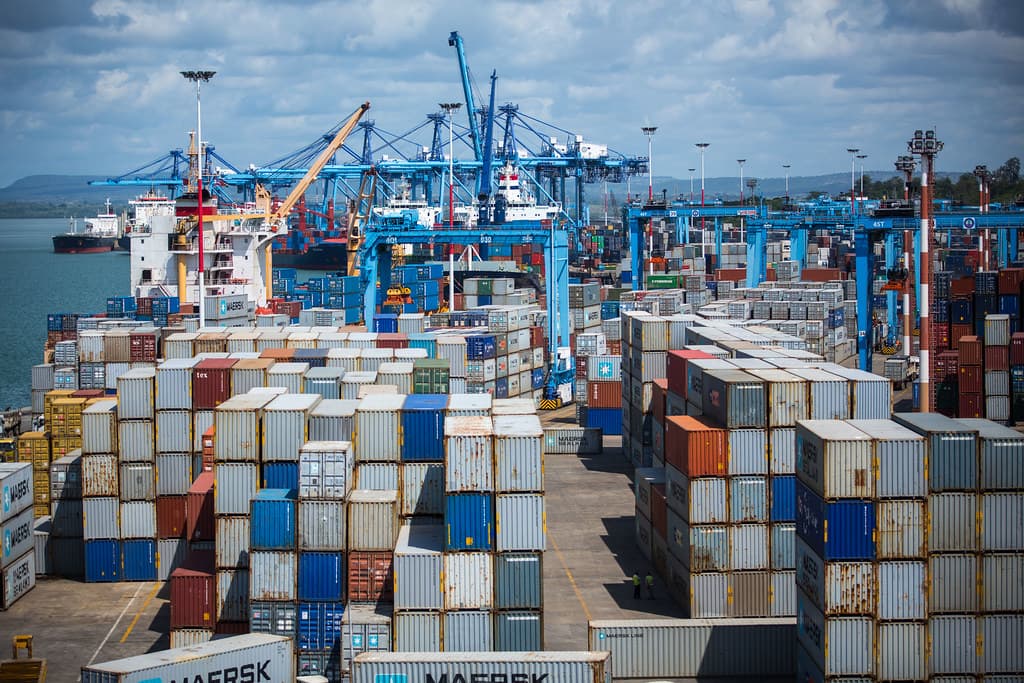
Cover photo of the Port of Mombasa by Make It Kenya, discovered via Openverse. Marked with the Public Domain Mark 1.0.
Editorial
The OnLink editorial team writes about money, payments and multicurrency banking for people and businesses moving money in and out of Kenya.
At a CNY sell rate of KES 19.42, a CNY 100,000 supplier invoice costs KES 1,942,000; each KES 0.10 rate difference changes the bill by KES 10,000.
Mercury’s current prohibited-country list does not include Kenya. At the 11 August rate, USD 3,867 covers a founder’s KES 500,000 local budget.
Learn how to compare USD to KES quotes using the exchange rate, explicit fees and final KES received—not the headline rate alone.

